
Digital signage software development for any screen

Total VDO provides digital signage software development: custom players for Android, Samsung Tizen, LG webOS, Roku and Fire TV, a cloud CMS for scheduling and multi-zone layouts, AI audience analytics, and the ad slots and proof-of-play logs that programmatic DOOH requires. We build and run our own signage platform, so this is work we do every day.

  • Android
  • Samsung Tizen
  • LG webOS
  • Roku
  • Amazon Fire TV
  • Android TV
  • Cloud CMS
  • Computer vision
  • SSP integration
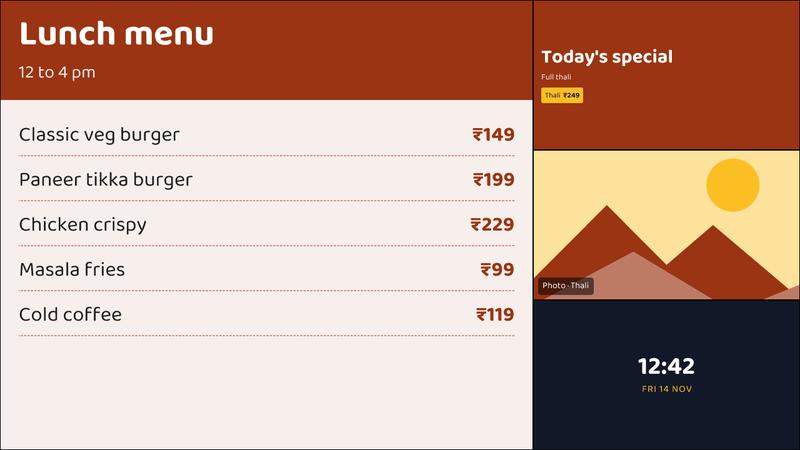
TScreen TV menu board with a lunch menu, prices, a daily special and the time

What we build

  • Custom signage players

    Players for Android, Samsung Tizen, LG webOS, Roku and Fire TV that start on boot, recover after power loss and play offline.

  • Cloud CMS and scheduling

    Upload content, build playlists, schedule by day and time, and push updates to one screen or thousands from a browser.

  • Multi-zone and menu boards

    Layouts with video, images, tickers, clocks and live data in separate zones, including restaurant and retail menu boards.

  • Rate boards

    Boards for banks and jewellers that show current exchange, interest or metal rates pulled from a feed and refreshed automatically.

  • AI audience analytics

    Computer vision that counts viewers and measures dwell time from a camera, without storing faces or identities.

  • Programmatic DOOH readiness

    Ad slots, proof-of-play logs and SSP integration, so your screens can sell inventory to advertisers.

What you get

  • Screens that keep playing through restarts, outages and weak connections
  • A browser dashboard where your staff change content without calling a developer
  • Audience counts and dwell time you can show advertisers
  • Proof-of-play logs ready for ad buyers and programmatic platforms

What signage software has to do

Digital signage software development is mostly about reliability. A screen in a lobby, store or bank branch has to turn on, load its schedule and keep playing for months without someone standing next to it. It must recover from a power cut, play from cache when the network drops, and take updates from a distance.

So we build the player and the CMS as one system: a player for your screens that reports its health, and a cloud CMS where staff manage everything.

What we build

Content and layouts. Multi-zone screens mix video, images, tickers and live data. Menu boards update prices and availability from your point-of-sale or a spreadsheet. Rate boards for banks and jewellers show current rates from a feed and fall back to the last good values if it fails.

Scheduling. Playlists by screen group, day and time, with preview before publishing.

Players. Custom apps for Android, Samsung Tizen, LG webOS, Roku and Fire TV. Our smart TV app development team builds on the same platforms.

AI audience analytics

A camera and computer vision turn a screen into something you can measure. The system counts people who pass and who look, and how long they stay. We design it to be privacy-friendly: it processes the video to produce counts and dwell time, and it does not need to keep faces or identify anyone. Our AI and machine learning team builds the models.

Ready for programmatic DOOH

To sell screen time through programmatic platforms, a network needs three things: defined ad slots, proof-of-play logs that confirm each ad ran, and an integration with an SSP. We build all three into the CMS and the player, so you can start with your own content and add paid advertising later without replacing the system.

Built and run by us

We built and run TScreen TV, our own cloud signage platform for Roku, Android TV, Fire TV, Samsung and LG screens. We know where signage breaks, because we support it ourselves. Hotels and hospitals have special needs too, covered in our hotel IPTV solution.

Tell us your screens, your locations and who manages the content, and we will propose a player and CMS that fit.
Related work

Full portfolio
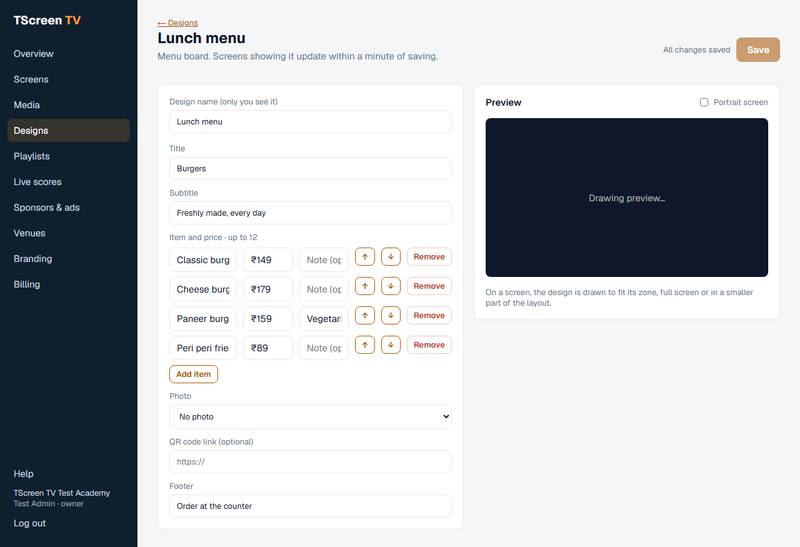
  • TScreen TV dashboard editing a lunch menu design with a live preview

    Case study: Digital signage product built by our team

    TScreen TV cloud digital signage platform

    One web dashboard and players for Roku, Android TV, Fire TV, Samsung, LG and browsers: menus, ads with proof of play, live scores and zones.

    • Next.js
    • Prisma
    • BrightScript and SceneGraph
    • Kotlin and Jetpack Compose
    • Tizen and webOS
    • PayPal and Razorpay

How a project runs

  1. Scope

    A short call and a written scope: what we build, for which platforms, the schedule and a fixed estimate.

  2. Design

    Screens for web, mobile and the 10-foot TV view, reviewed with you before any code is written.

  3. Build

    Two-week sprints with a working demo at the end of each, in a repository you own.

  4. Launch

    Testing on real devices, store submissions and certification, then a monitored go-live.

  5. Run

    Monitoring, updates and new features on a monthly plan, or a documented handover to your team.

Frequently asked questions

Do you build signage for our own screens or sell a platform?

Both. We build custom signage software to your requirements and own source code. We also run TScreen TV, our own cloud signage platform, for teams who prefer to start with a ready-made product.

Which screens can run the player?

Android devices and Android-based displays, Samsung Tizen, LG webOS, Roku and Amazon Fire TV. We pick the player type that fits your screens and hardware budget.

Is AI audience analytics private?

It can be. The system counts people and measures how long they look at a screen from the camera feed and stores only counts, not faces or identities. We agree the data you keep with you at the start.

What is programmatic DOOH readiness?

It means your screens can sell ad time automatically. That needs defined ad slots, proof-of-play logs that show what played and when, and an integration with a supply-side platform (SSP).

Can you build rate boards for banks or jewellers?

Yes. A rate board pulls current figures from a feed or your system, formats them for the screen and refreshes on a schedule, with a fallback if the feed fails.